
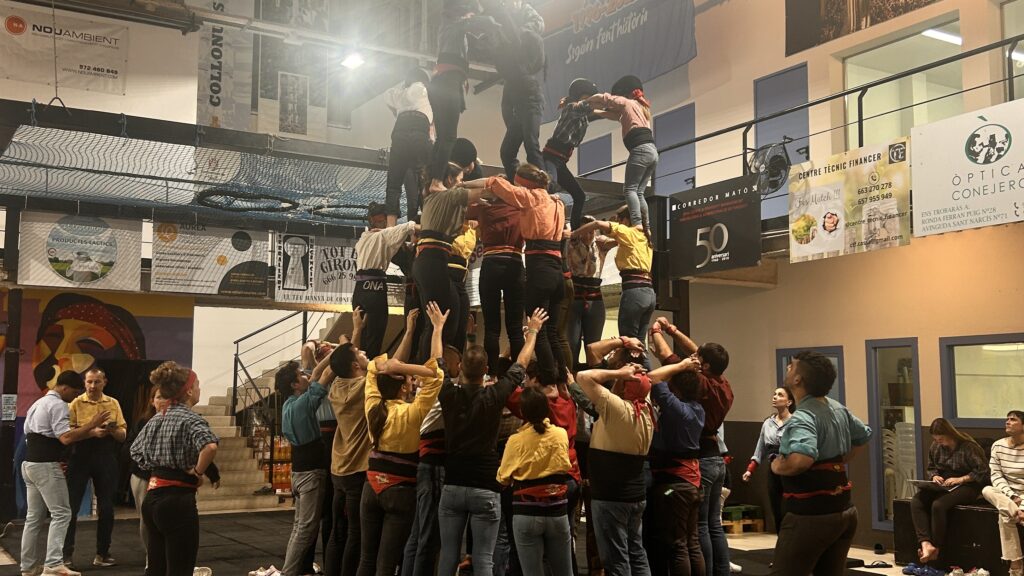
In the heart of Catalonia one of Europe’s most impressive traditions takes place, the Castells. These are human towers built through teamwork, strength and trust. What may first look like an extreme sport is in reality a deeply rooted cultural tradition.
What are Castells
Castells are human towers formed by groups of people standing on each other’s shoulders to build increasingly higher structures. At the very top is often a small child, known as the enxaneta, who raises a hand when the tower has been successfully completed.
Each tower is built by a colla castellera, a team in which everyone has a specific role. These roles depend on strength, experience and body type. The base is wide and strong, while each level above becomes lighter and more delicate.
A tradition with history
The tradition of Castells dates back to the 18th century in southern Spain. It originally developed from traditional dances performed during local festivals, but over time it evolved into the structured and highly technical practice seen today.
Castells are not just performances, they are a living cultural heritage passed down through generations and strongly connected to local identity and pride.
More than strength, trust and teamwork
Building human towers requires far more than physical strength, it depends on trust and coordination. Every participant must rely completely on others, because one mistake can affect the entire structure.
The base, known as the pinya, plays a crucial role. It supports the entire tower while also acting as a safety layer for those climbing higher.
Culture and emotion
Castells are not a competition in the traditional sense, but a shared achievement. When a tower is successfully built and safely dismantled, it creates a powerful atmosphere of emotion, pride and unity.
During local festivals, public squares fill with spectators who gather to witness this extraordinary tradition.
Where to see Castells
Castells can be experienced in towns and cities across Catalonia, especially during festivals in places like Tarragona, Vilafranca del Penedès and Barcelona. These events attract both locals and visitors who want to experience this unique cultural tradition up close.
Conclusion
Castells are far more than human towers, they are a symbol of cooperation, trust and cultural identity. Standing beneath one is an unforgettable experience that shows what people can achieve when they rely completely on each other.
In Catalonia tradition is not something from the past, it is something that is still built today by people standing on each other’s shoulders.